
What is poetry? It is a way of shaping words so their sound, sense, pace, and images matter together. A poem may tell a story, hold a feeling, or simply let us notice an ordinary thing from a new angle. It need not rhyme.
A poetry definition is only the start. This guide shows the parts of a poem, the main forms, and original short examples. You will learn to read aloud, draft lines, and use ChatGPT without losing your voice.
Table of Contents
What is poetry? A plain-English definition

When someone asks what is poetry, begin with close attention to how words work together. Their order, sound, and rhythm carry meaning alongside the ideas. A few lines may hold a whole scene. A longer poem may follow a family, a war, or a journey.
The Academy of American Poets’ definition shows why a strict rule is hard to find. Poets have long argued about what counts. Some forms have set patterns. Others grow from the writer’s own choices.
The question what is poetry leaves room for craft and discovery. A poem can be funny, fierce, tender, or strange. It can speak through a made-up voice. Its words may sound like daily speech. Asking what is poetry also means asking what gives speech its shape.
Poetry versus prose: what changes?

Prose is the form we often use for stories, letters, and articles. Sentences flow into paragraphs. Poetry often uses lines and stanzas instead. That visual shape can guide the reading pace, but it is not a perfect dividing line.
Consider this prose sentence: The porch light stayed on after everyone went home. It tells us what happened. A poem might slow the same thought down with a pause:
After the last goodbye,
the porch light
kept its small watch.
This original verse changes the event without adding many facts. The pause after “light” gives the object a brief moment alone. “Watch” hints at care or waiting. The speaker never names a feeling, yet one may come through.
The question what is poetry rather than prose depends on how the language works. A prose poem can use paragraphs. A story can sound lyrical. The difference often rests in how much weight the words, sounds, and pauses carry.
Poets can also break a sentence at an odd point. That choice makes the next word feel more important. It may leave a reader unsure for a beat.
The key elements of a poem

When you ask what is poetry made from, these terms make the choices easier to hear. The Harvard guide to poetic terms gives concise names for many of these choices. You do not need to name every device to enjoy a poem.
- Line: one row of words. Its end can create a pause or shift.
- Stanza: a group of lines, often set apart from the next group.
- Imagery: words that call up sight, sound, touch, smell, or taste.
- Rhythm: the pace and pattern of spoken words and pauses.
- Rhyme: a match or echo between sounds, often near line endings.
- Speaker: the voice heard in the poem, not always the author.
- Tone: the attitude that voice seems to carry.
- Metaphor: a comparison that names one thing as another.
These parts work together. A quiet line can turn loud with one sharp verb. A repeated sound can build tension. A change in stanza may move from the present moment to an old memory.
A useful response to what is poetry also asks about intention. Why does one line stop early? Why use a hard sound after soft ones? Why tell this story from a child’s view? Such questions lead toward meaning.
Three original poem examples, explained

Original examples make the question what is poetry less vague. The following three pieces were written for this guide. They are simple on purpose. Each shows a different way to handle one idea: a change we cannot stop.
Example 1: A brief image
The last leaf turns
in the empty birdbath.
No wind arrives.
The poem gives us one still scene. We may sense the end of a season. It does not name sadness or time. The empty space around the leaf gives the reader room to respond.
Example 2: A small rhyme
The kettle hums against the rain.
The windows blur the street again.
I set one cup beside the chair
and leave a space for someone there.
Its end sounds create a gentle link across the lines. The final cup suggests another person. The words do not tell us whether that person is late, gone, or expected. The reader can hold more than one thought.
Example 3: A voice with a turn
I said the house was quiet.
Then the old floor spoke
beneath my feet,
and I listened.
Here, the speaker changes their mind. The floor cannot speak as a person can. That small act of personification gives the room a life of its own. The final line lets the poem rest.
Ask what is poetry doing in each example, not just what it says. The first uses stillness. The second uses rhyme and an empty place. The third uses a shift in voice. No single method is required.
Types of poetry you are likely to meet

Asking what is poetry across traditions reveals many shapes. Forms offer a set of choices, not a ranking of good and bad art. A short poem may hold one scene. A long work may build a world. The form should help the subject.
Free verse has no fixed meter or rhyme plan. It still uses rhythm, words, and line breaks on purpose. A sonnet is usually fourteen lines and has a planned structure. Different sonnet traditions use different sound patterns.
A haiku is a short Japanese form with a long history. English-language teaching often uses a simple syllable pattern. That classroom rule is not a full account of the form. Pay attention to the observation and the shift as well.
A ballad tells a story, often through steady rhythm or repeating lines. An ode gives close attention to a subject. A prose poem looks like a paragraph but uses poetic focus on sound, image, and pace.
The Open University’s free poetry course explores lines, stanzas, rhythm, and traditional forms. Its terms can help you compare a rhymed poem with free verse.
A beginner may enjoy starting with free verse. It allows you to focus on one image before counting beats. If you like patterns, try a short rhyming stanza instead. Neither path is a shortcut to good writing.
When students wonder what is poetry with rules, show them two forms side by side. Ask which choice feels natural for the subject. A quick poem about rain may need space. A comic story may benefit from a steady rhyme.
How to read and understand a poem

A reader asking what is poetry about should not hunt for one answer. Read the whole poem and notice one thing you remember. It might be a sound, a phrase, or a picture. Then read it again at a slower pace.
First, name the speaker and the scene. Next, mark where the mood changes. Listen for a repeated word or sound. Notice where the lines end. Finally, ask what remains unclear and what the poem gives you to work with.
If an image seems odd, describe it in plain words. Say what is literally there before making a symbol from it. A cracked cup is first a cup. Its wider meaning depends on the rest of the poem.
Students who ask what is poetry about often want a single hidden message. Some poems do have a clear statement. Others hold two feelings at once. Support your reading with words from the poem rather than a guess about the writer’s life.
Read aloud when possible. A pause in print might sound natural or tense. A rhyme can feel playful, forced, or grim. Your ear may hear a shift that your eyes missed.
To answer what is poetry in a class essay, use this pattern: “I notice [detail]. It creates [effect]. The change at [line] makes me think [interpretation].” That gives you a claim, a clue, and a reason. Another reader may disagree.
How to write your first short poem
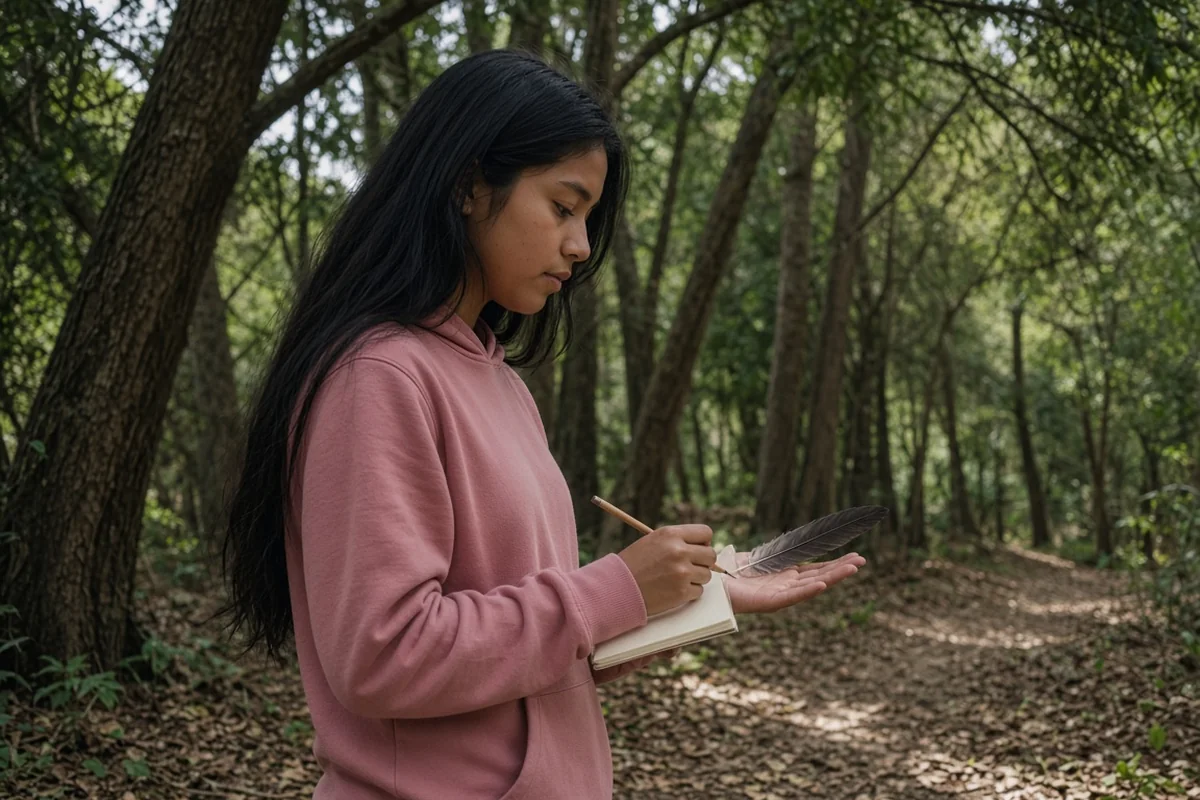
If you wonder what is poetry like to write, start without a fixed form. Start with something you saw, heard, or felt today. A bus door closing or a cold cup can work. Choose one small event and follow it closely.
- Pick a moment. Name one place, object, and action. Avoid a huge topic at first.
- Gather sense details. Write what you could see, hear, or touch. Keep only the best few.
- Find a turn. Ask what changed during the moment. The change may be tiny.
- Draft four lines. Use direct words. Let the lines stop where a pause feels useful.
- Read aloud. Cut phrases that explain what an image already shows.
- Revise one choice. Change a verb, move a pause, or remove a weak final line.
Here is a quick start: “The grocery bag split at the door.” The moment has an action and a place. Now ask what fell out, who saw it, and how the speaker reacted. A poem can grow from that answer.
To learn what is poetry through practice, write the same moment in two forms. Make one version a plain paragraph. Write the next in five short lines. Compare the pace and effect, not just the words.
A useful test is whether each detail earns its place. If a line names an emotion, see whether a concrete action could show it. If a rhyme bends the grammar, let the rhyme go. Sound should serve the poem.
Using ChatGPT to study poetry without losing your voice

When you ask what is poetry doing on a page, ChatGPT can discuss lines, tones, and devices. It can also make mistakes about meaning. Treat its answer as a suggestion to test against the actual poem, not the final word.
OpenAI’s prompting guide recommends clear requests and follow-up changes. That approach suits poetry study. Give the poem, say what feedback you need, and keep the task narrow.
Try this reading prompt with a poem you have permission to share:
Read the poem below without guessing the writer's intent.
Describe its speaker, one key image, and one shift in tone.
Quote only short phrases from the poem as evidence.
Give two possible readings and say what supports each.
Poem: [paste your poem]
To revise your own work, you could use this:
I wrote the short poem below. Keep my words and voice.
Point out two vague images and one line that sounds stiff.
Offer three possible line breaks, with a reason for each.
Do not rewrite the full poem unless I ask.
Draft: [paste your poem]
If your question is what is poetry in a school text, give ChatGPT the lesson excerpt first. Ask it to stay within that material. Then compare its claims with your class notes or the original source.
AI can supply a starting spark. Your choice of detail and final lines still matters. For more practice, see Writing Prompts and the AI prompt generator. Both help when a blank page feels too broad.
Common mistakes when reading or writing poetry

A common mistake when asking what is poetry is assuming all poems must rhyme. Forced rhymes can make a serious idea sound silly. Another is filling the page with grand words. A plain noun and a sharp verb often do more work.
Readers may also treat every object as a fixed symbol. A bird is not always freedom. Ask what the bird does within this poem before deciding what it means. The speaker is not always the poet, either.
A third mistake is turning the poem into a long summary. In a class response, name one detail and explain its effect. You need not retell each line. A few well-chosen words are stronger than a page of guesses.
Writers sometimes explain the mood at the end. They write “I felt sad” after a clear image of loss. Read the poem without that final line. The image may already carry the feeling, with more room for the reader.
The question what is poetry can become a trap if it leads only to labels. Forms and devices are tools. They are not a score sheet. A short poem with simple words can be rich. A complex rhyme plan can still feel empty.
To keep ideas fresh, browse short story ideas or try the character voice rewriter. A focused article outline can also help plan longer verse.
Frequently asked questions
Does poetry have to rhyme?

No. Asking what is poetry without rhyme points toward free verse, which has no set rhyme scheme. A poem can build rhythm through its line breaks, repeated sounds, and word choices.
What is the difference between a poem and poetry?

A poem is one piece of writing. Poetry is the wider art or form that includes individual poems, spoken works, and many different traditions.
Can a poem be a paragraph?

Yes. The question what is poetry in paragraph form leads to prose poems, which use imagery, rhythm, and careful language.
Can ChatGPT help me write poetry?

Yes. It can suggest ideas, discuss line breaks, or offer feedback on a draft. Check its advice and keep your own voice in the final poem.
A simple answer to what is poetry starts with care for language. A poem may use line breaks, rhyme, or a block of prose. What matters is how its words shape attention. Try reading one aloud today. Notice where you pause, what you picture, and what stays with you.


