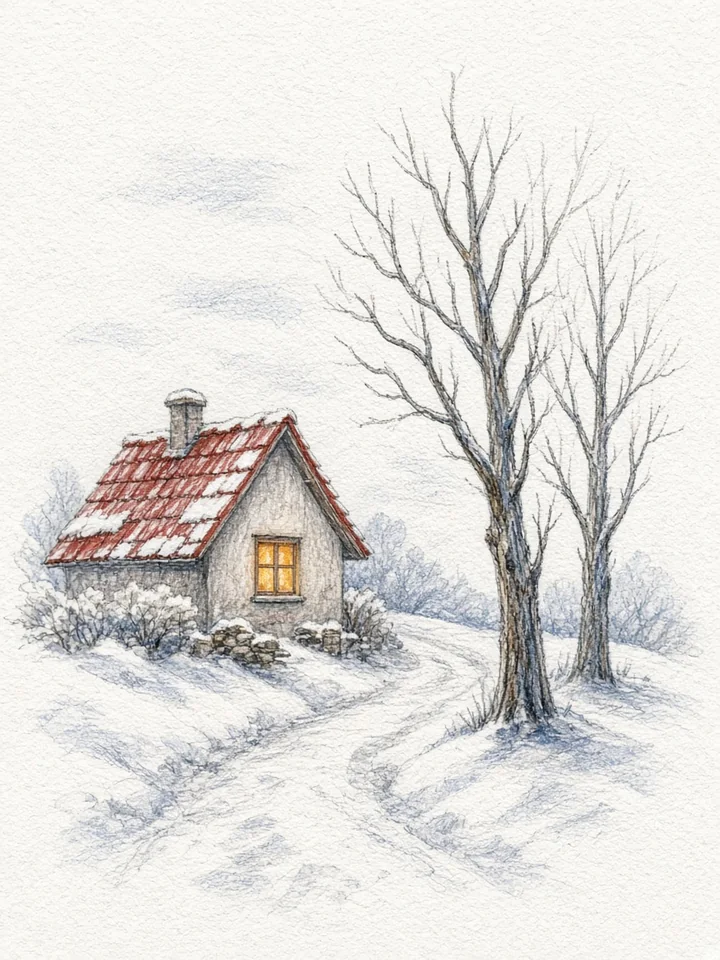
A good winter drawing starts with shapes you can recognize before adding every snowflake. One bare tree, cottage or animal track can carry the whole picture. Good references show the light, essential lines and areas of white paper.
Start with the prompt in the box above. The 30 options below cover easy sketches, snow-covered plants, winter animals, cozy interiors, outdoor scenes and more detailed pencil studies. Each prompt provides a reference to draw.
Table of Contents
How to use winter drawing prompts in Gemini and ChatGPT

Paste a prompt into Gemini or ChatGPT; choose graphite, crayon or colored pencil. Specify one subject, viewpoint and detail level. A winter drawing reference should show forms to copy without doing all the work for you.
The official ChatGPT image guide covers generating and refining pictures. Google’s Gemini image help explains how to request a drawing style or upload a reference. For more subjects beyond winter drawing, browse Drawing Ideas.
Easy winter drawing ideas with simple shapes
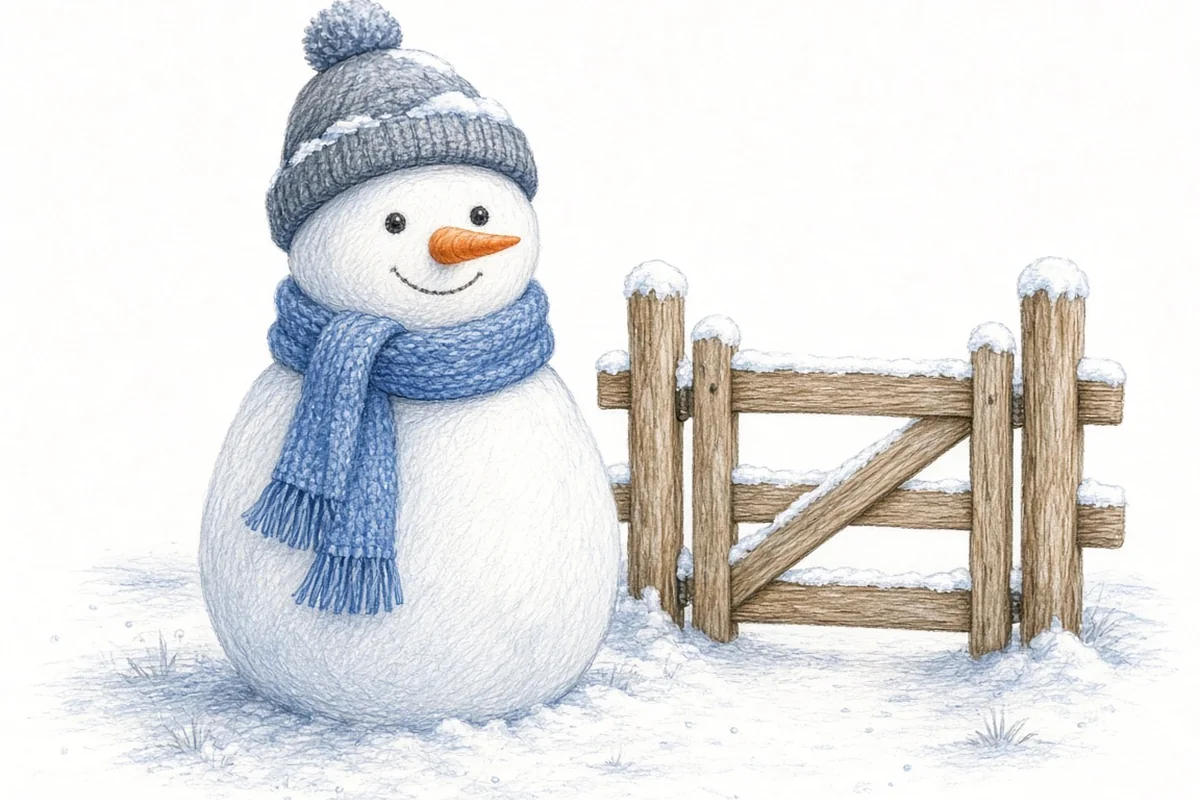
Beginners often do better with one large object than with a crowded landscape. Start with its outline and add two or three features. These easy winter drawings use bold shapes that still look interesting when you leave the background mostly blank.
- Scarf snowman: “Make a beginner pencil reference of one snowman in a striped scarf. Show three stacked shapes, twig arms, snow shadows, landscape 3:2, no text.”
- Wool mitten: “Show one knitted mitten hanging from a wooden peg, thick contour lines, a simple cuff pattern, warm indoor light, colored-pencil reference, landscape 3:2, no text.”
- Single fir tree: “Draw one snow-covered fir with triangular branches, a little exposed trunk, clear white gaps, simple graphite sketch, vertical 3:4, no text.”
- Ice skate: “Create a side-view sketch of one old-fashioned ice skate with blade, plain laces, light crosshatching, clean white background, landscape 3:2, no text.”
- Snow globe: “Show a plain snow globe containing one tiny pine tree, large glass outline, gentle falling flakes, easy ink-and-pencil style, landscape 3:2, no text.”
Frosty plants and small nature studies

Small nature studies let you practice texture without planning a whole scene. Look for changes in edge quality: sharp needles, rounded snow and thin bare twigs. In winter drawing practice, one branch can teach more than a page of scattered objects.
- Frosted pine branch: “Create a graphite study of one pine branch carrying snow clumps. Show crisp needles, pale shadows, white paper background, landscape 3:2, no text.”
- Birch bark: “Show the curved trunk of one birch tree with bark marks and snow along one side, simple shading study, vertical 3:4, no text.”
- Frozen berries: “Draw a cluster of red berries hanging from a leafless twig, ice crystals and outlines, colored-pencil botanical style, landscape 3:2, no text.”
- Pinecone in snow: “Make a pencil close-up of one open pinecone partly buried in powdery snow, layered scales with shadows, landscape 3:2, no lettering.”
- Window frost: “Illustrate delicate fern-like frost along one corner of a windowpane, pale blue glass and fine graphite details, simple close composition, landscape 3:2, no text.”
Winter animals to sketch from references

An animal drawing becomes easier when you begin with its silhouette. Use an oval for the body, a small head shape and clear leg placement before adding fur. Your winter drawing reference should also show how the feet meet the snow.
- Snowshoe hare: “Draw one white snowshoe hare beside a fallen branch. Show rounded body, ears and oversized feet, pencil texture, landscape 3:2, no text.”
- Red fox: “Illustrate a red fox stepping over fresh tracks, pointed muzzle and sweeping tail, colored-pencil strokes, muted snowy background, landscape 3:2, no text.”
- Cardinal: “Make a close pencil study of a cardinal perched on a bare twig, clear beak and crest shapes, limited red accents, landscape 3:2, no lettering.”
- Arctic owl: “Show a snowy owl resting on a small rock with wings folded, round head, subtle feather markings and pale gray shading, vertical 3:4, no text.”
- Bundled penguin: “Draw one small penguin wearing a plain knitted scarf on flat snow, simple black-and-white body shapes and blue shadows, landscape 3:2, no text.”
Cozy indoor winter sketches

Cozy scenes give you clear contrasts between a warm room and a cold window. Keep the objects simple, then shade the spaces between them. A winter drawing with one mug or lamp can feel complete without many decorations or labels.
- Steaming cocoa: “Create a pencil sketch of a plain mug of hot cocoa on a windowsill. Add snow outside and amber light, landscape 3:2, no text.”
- Knitted socks: “Draw two wool socks draped over the arm of a plain chair, chunky knit texture, warm side lighting, easy pencil contours, landscape 3:2, no lettering.”
- Reading nook: “Illustrate one floor lamp lighting a folded blanket beside a snow-covered window, simple cozy room geometry, colored pencils, vertical 3:4, no text.”
- Winter boots: “Make a graphite study of one pair of damp snow boots on an entry mat, simple reflections and floor shadows, landscape 3:2, no words.”
- Warm fireplace: “Show a small fireplace with three logs and one wool rug, orange glow, clean perspective lines, colored-pencil reference, landscape 3:2, no text.”
Snowy landscapes and outdoor scenes

For a wide scene, place the horizon before adding trees or rocks. Near objects should look larger and carry darker marks. This winter drawing approach helps depth feel clear, even with only a few colors and one strong line leading into the distance.
- Frozen river bend: “Draw a winding frozen river between snowy evergreens. Add darker foreground shadows and pale sun, colored-pencil landscape, landscape 3:2, no text.”
- Snowy hill trail: “Sketch a path climbing one snowy hill toward a lone pine, light blue shadows and distant layers, landscape 3:2, no text.”
- Rocky mountain ridge: “Create a graphite study of three overlapping mountain peaks with snow on ledges, rocky foreground contours and far peaks, landscape 3:2, no lettering.”
- Quiet bridge: “Illustrate a small wooden footbridge crossing an icy stream, snow on handrails and bare trees beyond, calm pencil lines, landscape 3:2, no text.”
- Winter sunrise: “Draw a low orange sun above an open snowy meadow, one dark fence line and soft violet shadows, simple pastel-pencil landscape, landscape 3:2, no text.”
Detailed winter pencil drawing studies

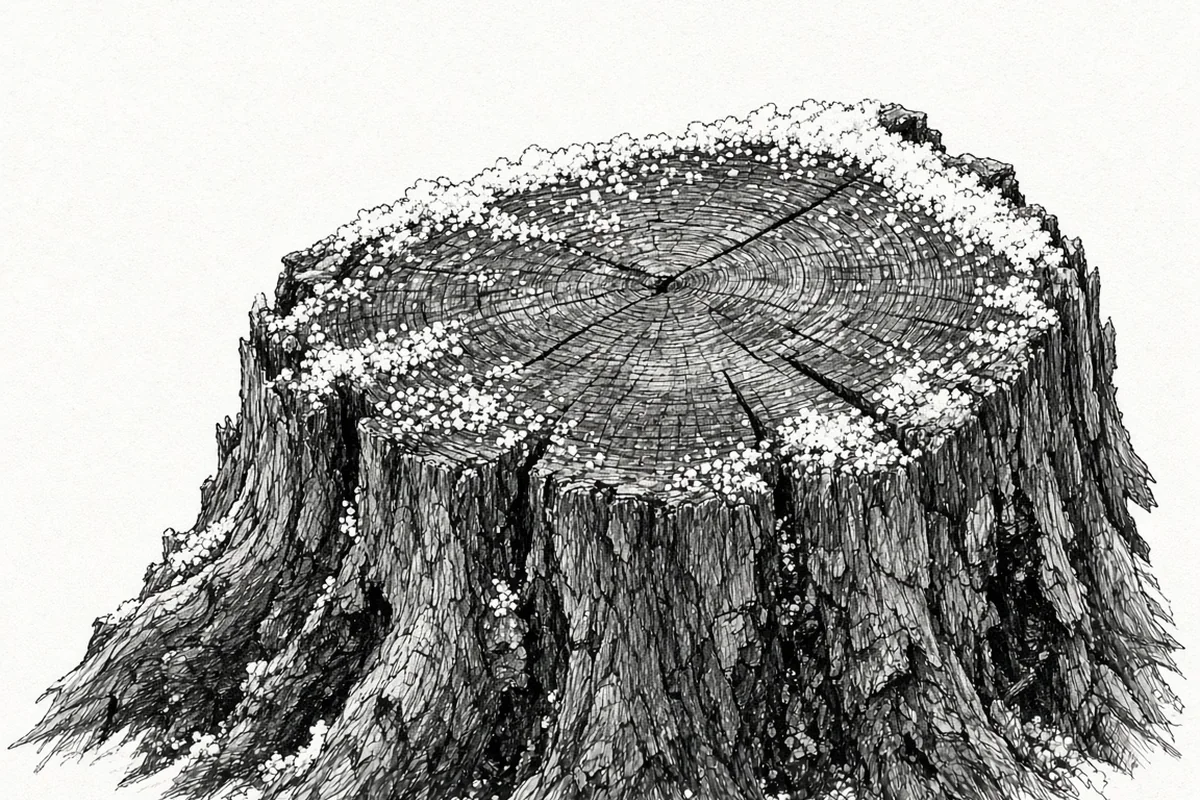
More detailed sketches need careful choices, not marks everywhere. Build the form with light contours first, then deepen only the darkest areas. For a winter drawing in graphite, untouched paper can show the brightest snow more convincingly than heavy white highlights.
- Bare oak study: “Make a detailed graphite drawing of one leafless oak tree on a snowy slope. Show branching structure, varied line weight and clean snow, landscape 3:2, no text.”
- Icicle close-up: “Draw five uneven icicles hanging from a stone ledge, gray shading, dark edges and reflected highlights, precise pencil reference, landscape 3:2, no lettering.”
- Snow on fence rails: “Create a graphite study of snow resting on rough fence boards, strong wood grain, soft rounded snow edges, landscape 3:2, no text.”
- Distant cabin value study: “Illustrate a remote cabin tucked below a snowy mountain, five clear graphite value levels, deep foreground pines and pale distance, landscape 3:2, no text.”
- Footprints in fresh snow: “Draw a diagonal line of boot prints crossing powdery snow, crisp near edges and faint distant prints, controlled graphite shading, landscape 3:2, no text.”
Fix common mistakes in AI winter sketch references

If an AI reference looks muddy, request “one subject, fewer marks and clearer outlines.” Remove random objects and heavy gray snow. Check branches, paws and shadows before copying anything. Drawing from a flawed reference can turn one odd mark into several more.
ChatGPT supports targeted edits, so you can simplify one area without changing everything else. OpenAI’s image-input guide also explains how uploaded pictures can be reviewed. A pencil thumbnail makes a useful final check.
More seasonal sketch inspiration

If you enjoy snow scenes, winter wallpaper prompts offer more scenery to study. Cute winter wallpaper prompts suit playful characters. For bold outlined shapes, try Thanksgiving clipart prompts. The Drawing Ideas category has other subjects, while the AI prompt generator can help you change the style or viewpoint of a reference.
Questions about winter drawing
What is an easy winter drawing for beginners?

Start a winter drawing with a snowman, mitten or single pine tree made from a few large shapes. Add a ground line and just one small detail before trying a full winter scene.
Can ChatGPT and Gemini make winter drawing references?

Yes. Both tools can generate an image from a written description. Ask for the exact art medium, a clear subject and the amount of detail you want, then inspect the result before copying it.
How do I draw snow with a pencil?

Leave most snow areas as the white of the paper. Shade the edges of drifts and the undersides of branches lightly, then darken nearby trees or rocks to create contrast.
What winter drawing ideas work for kids?
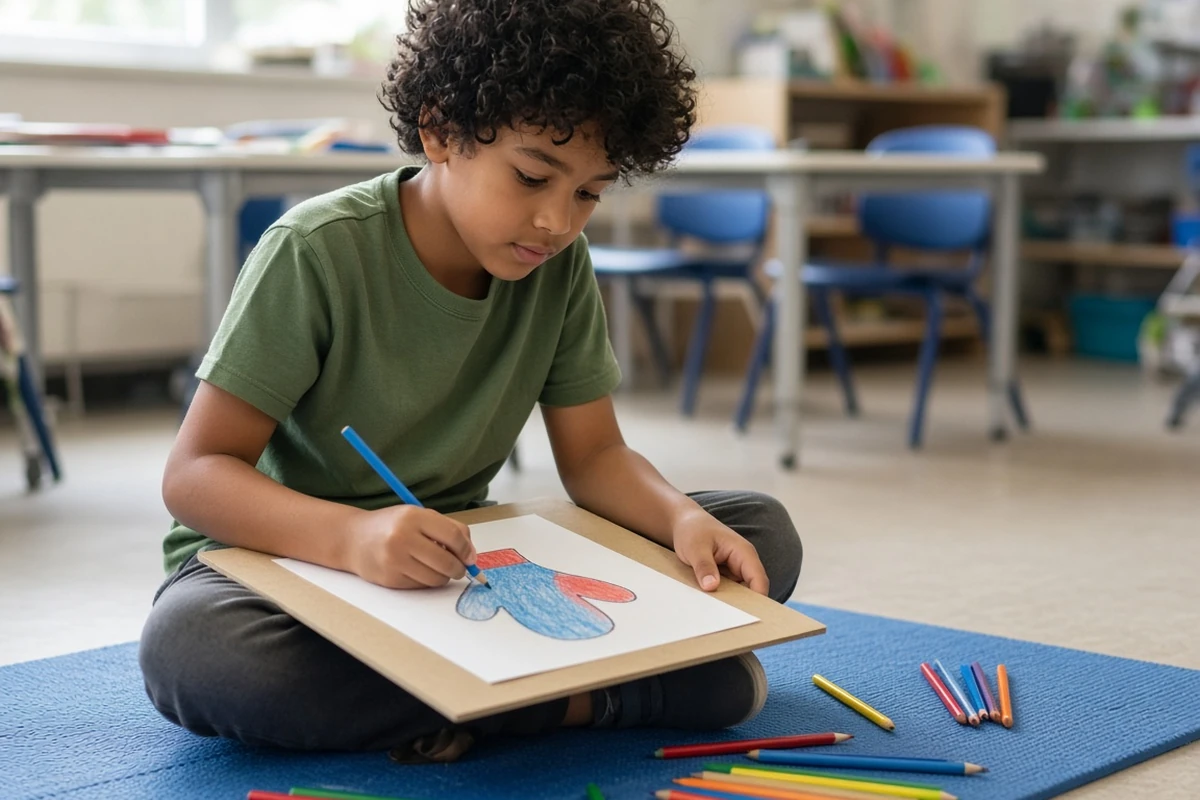
Choose a large mitten, a round snowman, a bundled-up penguin or a simple snowy house. Keep the outline clear, use only a few objects and add details one at a time.